


Introducing our February Colour of the Month: Cupid Pink
Trends
16th February 2026
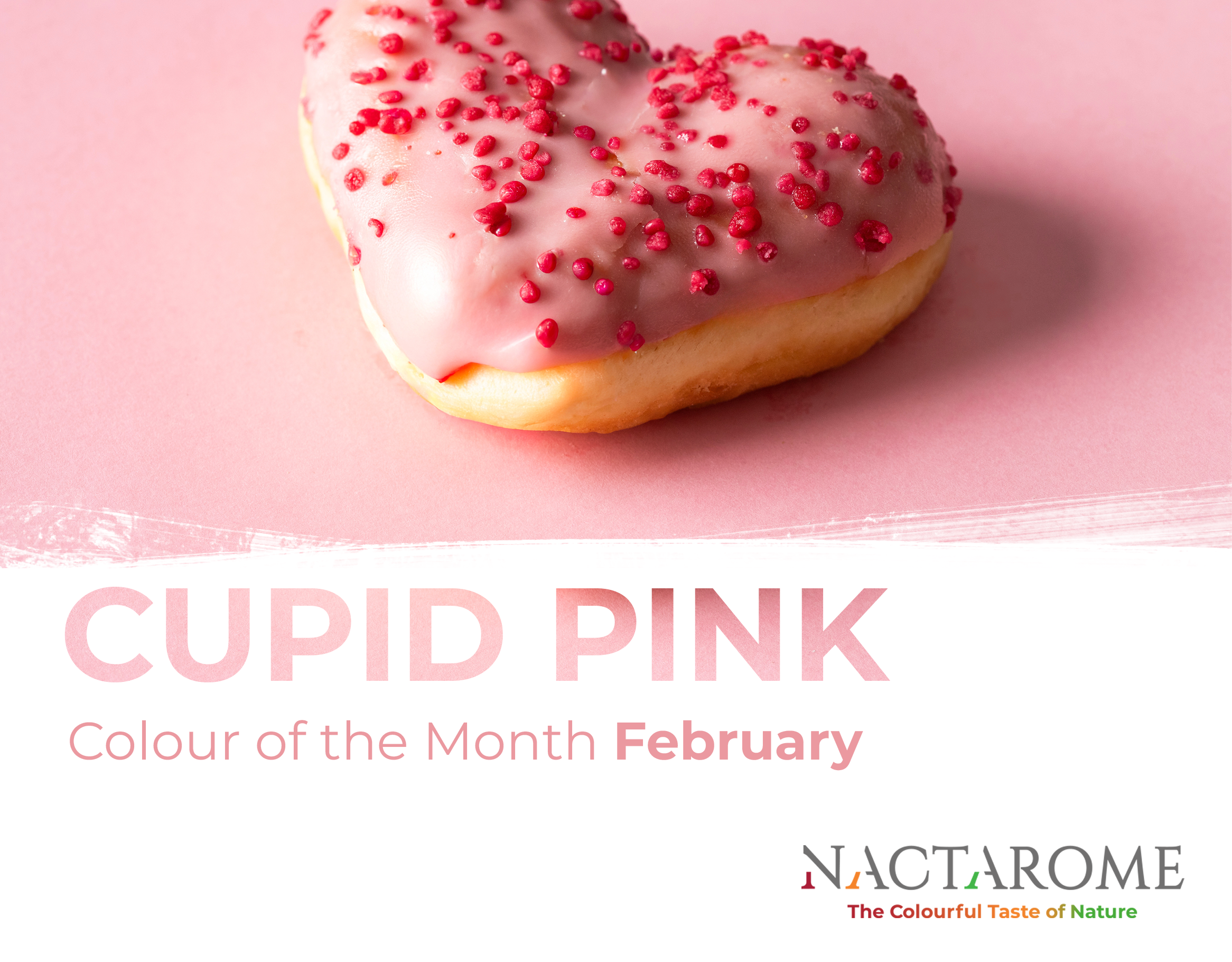
Cupid Pink: A February Colour Story for Food
Valentine’s Day may be over, but pink remains one of the most emotionally powerful colours in food.
Associated with sweetness, indulgence and pleasure, pink tones continue to shape consumer expectations across categories such as confectionery, dairy, bakery, desserts and beverages. It is a colour that instantly connects with emotion and that makes it timeless.
This February, we highlight Cupid Pink: a soft, expressive pink inspired by Valentine’s, and closely linked to the evolving needs of today’s food industry.
The role of pink in food design
Colour is often the first sensory cue consumers experience. Pink shades help communicate:
- Sweetness and creaminess
- Softness and indulgence
- Emotional warmth and premium appeal
As consumer awareness grows, brands are increasingly looking beyond aesthetics, seeking colour solutions that align with ethical, cultural and clean label expectations.
Rethinking traditional pinks
For many years, carmine has played a central role in achieving pink and red shades. Today, supply chain uncertainty, animal origin and labelling considerations are accelerating the move toward alternative solutions.
In this context, plant-based colour approaches are becoming essential to recreate familiar visual cues, including pink tones, while meeting modern formulation and market requirements.
From inspiration to application
At Nactarome, we support food manufacturers with a portfolio of natural, plant-based colour solutions developed as alternatives to carmine. These solutions allow brands to explore a wide range of pink and red tonalities, adapting to different products, processes and markets.
Cupid Pink reflects how colour inspiration and technical expertise can come together to deliver appealing visuals — without compromising on ingredient strategy.
Discover how plant-based alternatives to carmine can support pink colour development across food applications.
